Webtoon Scanlation: What It Is, How It Works and Whether It Is Legal
Webtoon scanlation is the fan translation of Korean webtoons. What it is, how it differs from manga, the work that goes into a chapter, whether it is legal, and how to translate a webtoon for your own reading.
Serifu · · 5 min read
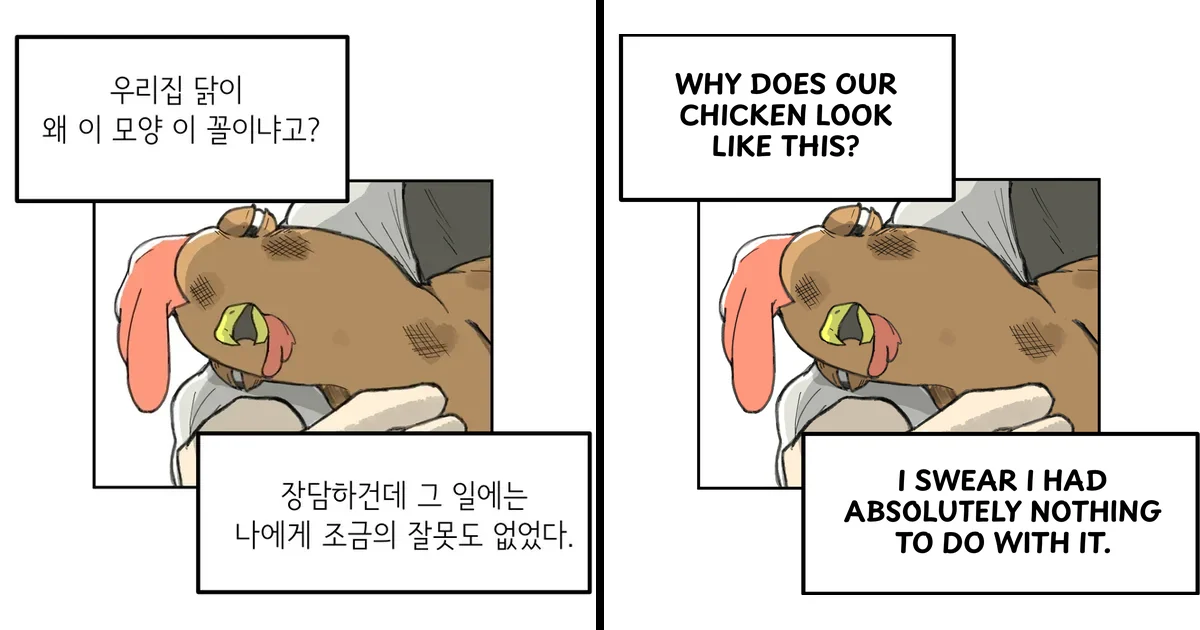
Webtoon scanlation is the fan translation of webtoons: a chapter of a Korean (or Chinese) webtoon has its original text erased, translated and lettered back into the balloons in another language. The word joins scan and translation; webtoons are published online, so nothing is scanned, but the name stuck.
This guide explains what webtoon scanlation is, what changes when the comic is a vertical strip instead of a manga page, the work that goes into one chapter, and where the law stands. If you only want to read a webtoon you have in your own language, skip to translating a webtoon for yourself.
What webtoon scanlation is
Scanlation started with Japanese manga: fans scanned printed volumes, translated them and shared the pages. Webtoon scanlation is the same practice applied to webtoons, the vertical, full-colour comics that Korean platforms publish chapter by chapter and that readers scroll on a phone.
Three things make a webtoon different to translate:
- It is one long strip. A chapter is a single image tens of thousands of pixels tall, which sites deliver as slices of a fixed height. The slices are cut wherever the height runs out, often through a panel or a balloon.
- It is in colour. Balloons sit over gradients, painted skies and effects, so erasing the text is redrawing, not filling with white.
- The text is horizontal. Korean is lettered left to right, like English, so a translation fits the balloon's shape more easily than with vertical Japanese; sound effects, though, are often painted into the art.
The work in a webtoon scanlation
Translating a webtoon chapter is several jobs. In a team each has a name; one person can do all of them.
| Job | What it is |
|---|---|
| Translation (TL) | Every balloon, caption and sound effect written out in the new language |
| Proofreading (PR) | The script read for grammar, names and how people really talk |
| Cleaning and redrawing (CLRD) | The original text erased and the art behind it redrawn |
| Typesetting (TS) | The translation lettered into the balloons: font, size, line breaks |
| Quality check (QC) | The finished chapter read once more for mistakes |
A chapter goes through them in this order:
- Stitch and cut. The slices are joined into one strip and cut again into pieces a person can work on, at the blank space between panels, so no balloon is split. SmartStitch, a free open-source program, describes itself as one "for stitching and cutting webtoons/manhwa/manhua raws" and avoids cutting through speech or effects.
- Translate. A script, piece by piece, numbered by balloon. Names and recurring terms go in a glossary so they stay the same from chapter to chapter.
- Proofread. The script is checked against the art: who is speaking, in what tone, whether a joke lands.
- Clean and redraw. The Korean is erased. In a white balloon this is quick; on a coloured background, or where a sound effect is painted over the art, the background is redrawn by hand.
- Typeset. Each line is lettered into its balloon in a comic font, sized and broken to fill the shape; sound effects get their own lettering. More on this step in manga typesetting.
- Check and export. The chapter is read top to bottom one last time, then exported as a strip or as slices.
Is webtoon scanlation legal?
No, not without permission. A webtoon is a copyrighted work: translating it and sharing the translation without the rights holder's permission is copyright infringement, even when it is free, and many webtoons have official translations that a scanlation takes readers from.
What is allowed:
- Read the official translation where there is one, on the platform that publishes the series.
- Translate with permission. WEBTOON ran a fan translation service for almost ten years, where volunteers translated series with the platform's permission. WEBTOON announced on 25 September 2025 that it would close it; it shut on 26 November 2025, and its translations were deleted. Without it, permission comes from the rights holder directly.
- Translate for yourself. Translating a chapter you have, to read it yourself and not share it, is generally treated as personal use.
Translating a webtoon for yourself
To read a webtoon you have in your own language, you do not need a team: an AI webtoon translator does the whole chapter at once. Serifu's webtoon translator works in the browser, on the images you have:
- Drop the chapter's images: one tall image or its slices, as a folder, a ZIP or CBZ.
- Check the pages and the price. The images are joined into one strip and cut at the blank space between panels into pages about three times as tall as they are wide. In the chapter below, 16 slices became 42 pages, none of them cutting a balloon. It costs 1 credit a page, and 5 pages are free when you sign up.
- Read. Each page is read with the pages before it as context, translated, cleaned and lettered in its balloons and caption boxes, sound effects included. Export the chapter as one long image, as its slices, or as CBZ, PDF or images.
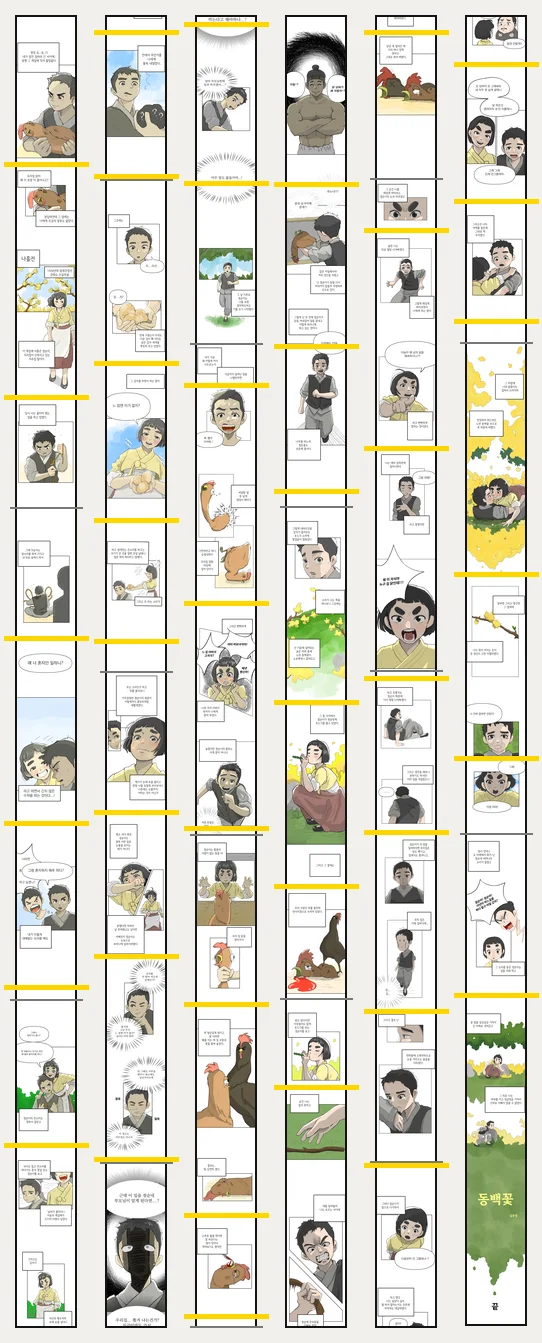
The page at the top of this post is that output, unedited: 「동백꽃」 by 이호윤 (CC BY, via 공유마당), from Korean into English.
Serifu is a tool for comics you have bought or have permission to translate, for your own use; its acceptable use policy says so. If you are translating your own webtoon, or one you have the rights to, the Serifu app (macOS, Windows) adds an editor: change the font and size of any line, retouch text drawn on the art, keep a glossary of names across chapters, and export layered PSD.
FAQ
What is the difference between scanlation and fan translation?
None in meaning: scanlation is fan translation of comics. The word comes from scanning printed manga; webtoons are published online, so nothing is scanned, but the name is still used.
Is manhwa scanlation the same as webtoon scanlation?
Mostly. Manhwa is the Korean word for comics, and most manhwa today are webtoons, published as vertical strips. Manhwa printed as pages is translated like manga; the manhwa translator takes both.
Can I share a webtoon I translated with Serifu?
Only with the rights holder's permission. A translation of someone else's work is theirs to allow; without permission, keep it for your own reading.
Related
- Webtoon translator: translate a webtoon chapter in your browser
- Manhwa translator: Korean comics, as strips or pages
- Manga typesetting: lettering a translation into the balloons
- How to translate manga
- Best manga translator in 2026